
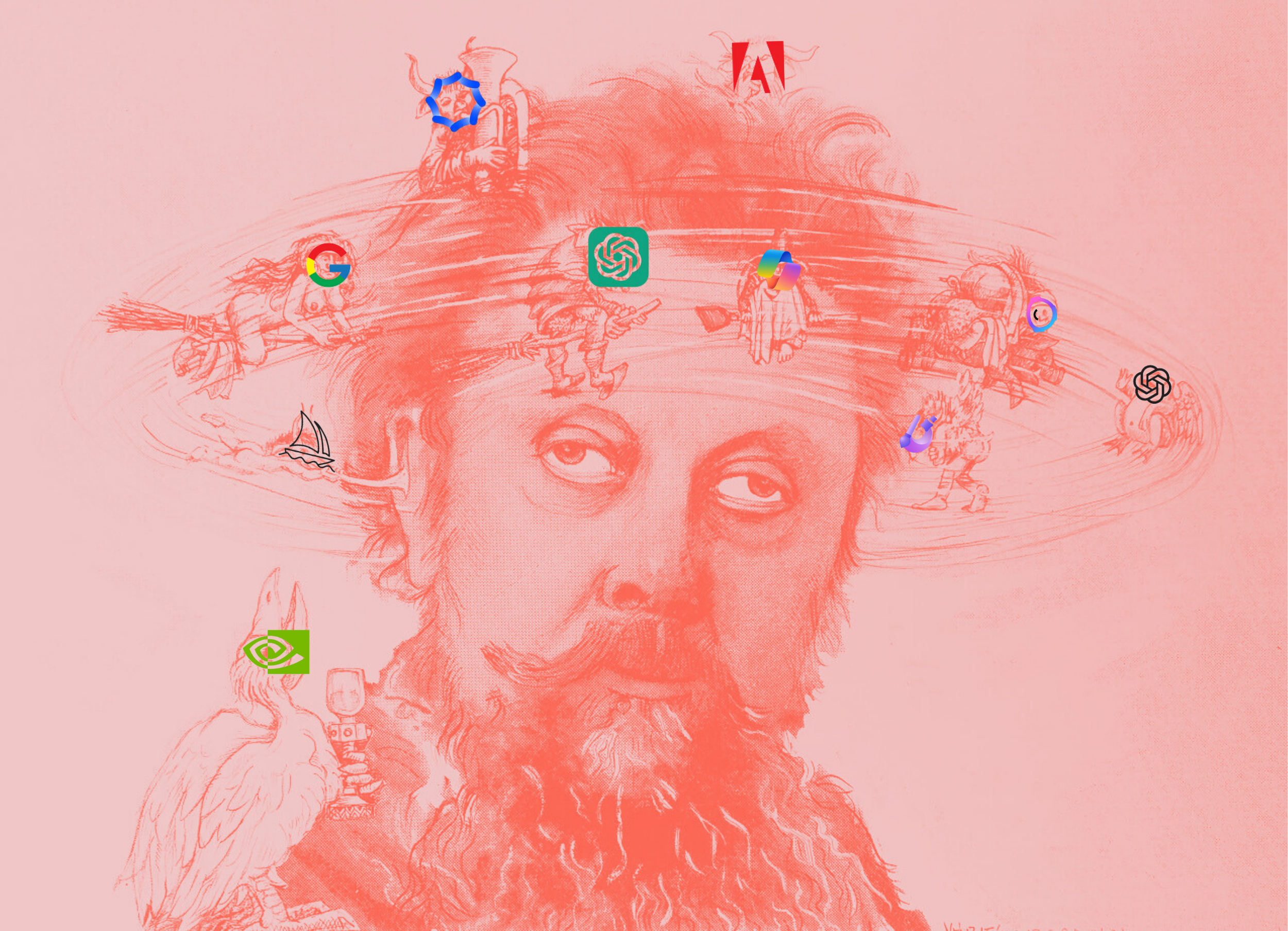
In Between Sense and Digital Nonsense
This research investigates a precise philosophical question: are artificial intelligence and their results discernible without incorporating humans? The motivation for this question is an extreme form of De-Anthropocentrized Externalism, slithering away from “the anthropocentric abstractive sweet-spot”. The concept of an abstractive sweet-spot, within its own limitations and vagueness, runs a risk of turning a human into, what I call, “teleofunctional philosophical zombie” - a physical replica of an actual human being whose inside ghost has been translated into desired functions.
This naturalistic understanding of the human and its mimetic implementation in artificial intelligence (henceforth AI) typically undermine human subjectivity. They confuse human and human-like AI. To demarcate between humans and AI models, I propose, first, to develop a rigorous account of what I term “quasi-sense” – a category of meaning-like productions that exhibit formal semantic properties while lacking the ontological grounding that human subjectivity provides to genuine sense – to address preter-intentionality through Markus Gabriel's ontological framework. AI outputs seem to participate in human fields of sense (linguistic, logical, social) yet their participation remains fundamentally derivative, creating what I call “ontological simulation” rather than genuine sense-making. Secondly, to address the theoretical lacuna between genuine-sense and quasi-sense, I develop an account of what I call “digital nonsense” - a categorical confusion among genuine, derived and preter-intentionality, deriving much from Gabriel’s thesis on nonsense. Subjectivity that essentially involves nonsense, is not only indispensable for the conception of the human but also for the imagination and judgement of AI which, of course, is embedded in culture, language, society, and technology.
Project by Dr. Prashant Kumar